
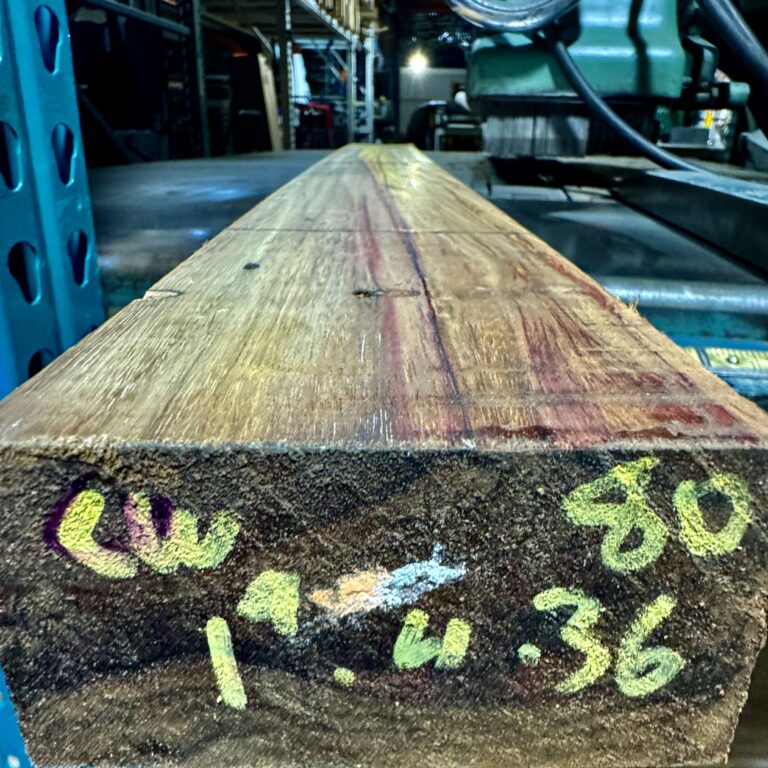
Canary Wood Guitar Builds: 2 Unique Canarywood Instruments
Canary wood, also known as Canarywood, is one of those South American hardwoods that quietly earns a place in luthiery without the usual fanfare reserved for rosewoods or figured maples.
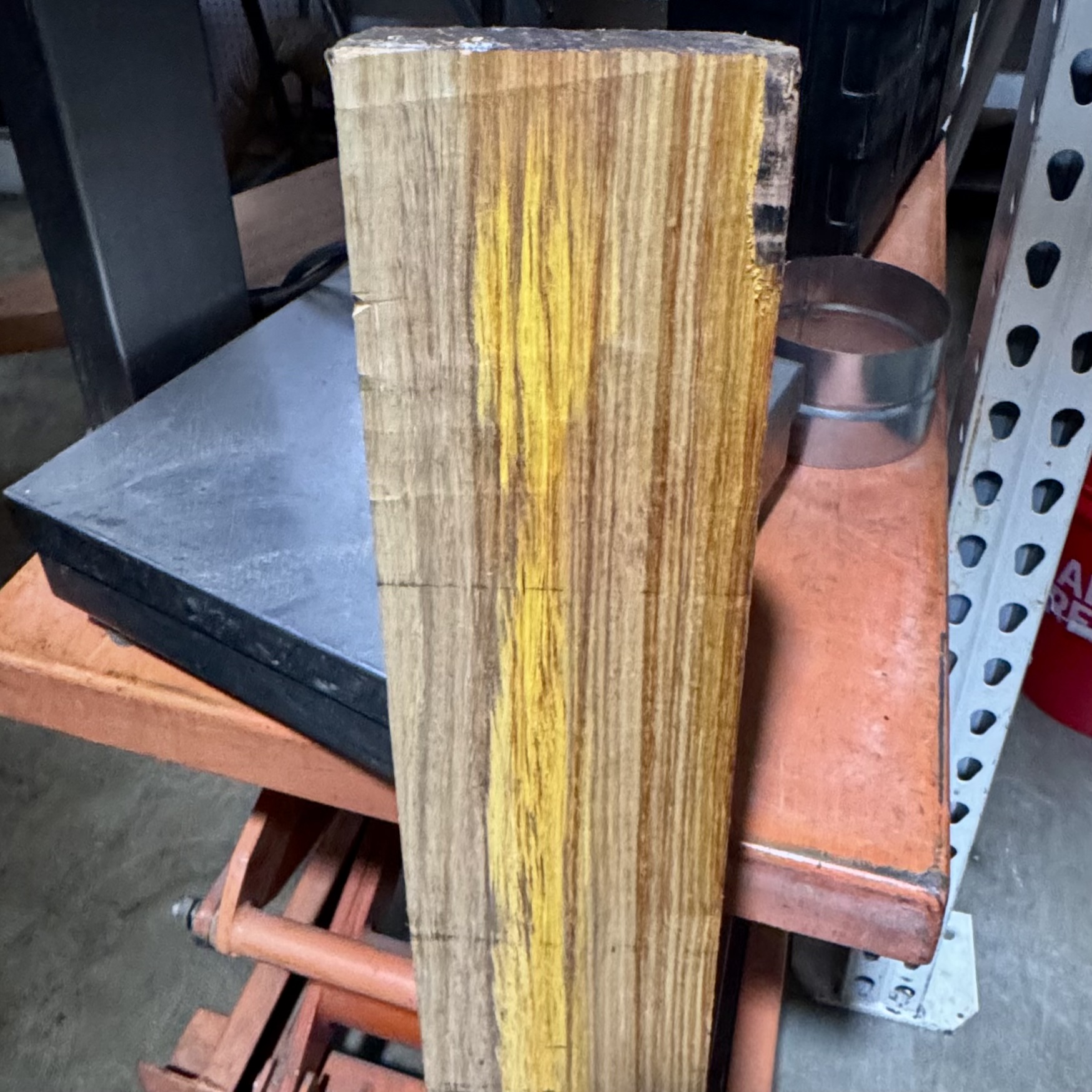
Canarywood (or Canary) is a distinctive South American hardwood from the genus Centrolobium. Closely related species, including Centrolobium ochroxylon and others, are sold under the same commercial name. The trees grow from Panama south through Brazil, typically reaching 65–100 feet tall with trunk diameters of 2–3 feet. (The Wood Database)
Heartwood ranges from pale yellow-orange to a richer reddish-brown, often marked by bold darker streaks that can appear almost rainbow-like on the best boards. Pale yellow sapwood is sharply demarcated. Color tends to darken and become more uniform with age and light exposure. Average dried weight is about 52 lbs/ft³, with a Janka hardness of 1,520 lbf—harder than black walnut or cherry yet still workable. Grain is usually straight but can be irregular or interlocked; texture is fine to medium with good natural luster. (The Wood Database)
The wood is rated very durable against decay and resistant to termites and marine borers. It works easily with hand and machine tools (though tear-out can occur on wild grain), turns, glues, and finishes well, and has good dimensional stability once properly dried. It carries a distinct scent when worked. Common uses include construction lumber, railroad crossties, flooring, veneers, boatbuilding, furniture, cabinetry, and turned items. It is also noted for good acoustic properties and is sometimes used for speaker enclosures. (The Wood Database)
For instrument builders, Canarywood remains uncommon in production electric guitars. It appears more often in custom or limited builds, drop tops, and occasional acoustic backs and sides. Two standout examples illustrate how the wood performs when chosen deliberately: the early-2000s Kendrick Canary and a 2023 PRS Private Stock Special Semi-Hollow.
The Kendrick Canary: Les Paul-Style Solidbody with Hand-Carved Canarywood Top

In the early 2000s, Kendrick Amplifiers (associated with Gerald Weber) added a new variation to its Continental line of Les Paul-inspired solidbodies. Named the Canary after its top wood, the guitar was hand-built in Texas by luthier Tony Nobles. (Vintage Guitar magazine)
Construction centered on a Honduran mahogany body with a narrower profile (approximately 1⅜ inches thick) and a rear body contour for comfort. The top was a hand-carved piece of Canarywood (Centrolobium ochroxylon, also known as Arariba). Reviewers described the wood as having a grain similar to pine with small, tight knots. The tester’s top showed a sweet, earthy look with matched grain and a couple of well-placed knots, framed by aged-look binding. (Vintage Guitar magazine)
The hand-carved mahogany neck featured an offset-V profile—thicker on the bass side, thinner on the treble—and was topped with a bound Madagascar rosewood fretboard carrying Dunlop 6105 frets and Kendrick’s trademark State-of-Texas inlays. Hardware included a locking tune-o-matic-style bridge, stop tailpiece, and vintage-style open Grover tuners in chrome. Electronics consisted of two custom-wound Lindy Fralin humbuckers, individual volume and tone controls, a three-way toggle, and 1950s-style braided wire. A capacitor on the neck volume helped the pickup clean up when rolled back. (Vintage Guitar magazine)
The body and neck received several thin coats of nitrocellulose lacquer to promote resonance while enhancing color and depth. The reviewed example weighed 7.2 pounds—light for a Les Paul-style instrument. Playability was excellent: low action that did not choke during bends, clean and level frets, and a comfortable offset-V neck shape that suited both chording and soloing. The thinner body profile and rear contour added further comfort whether sitting or standing. (Vintage Guitar magazine)
Acoustically, the guitar produced a clear chime even unplugged. Through a 1970s Marshall half-stack it became highly versatile. The bridge pickup delivered crunchy tones with good note separation; the middle position offered a “spitty” quality; and the neck position cleaned up usefully when the volume was reduced. Sustain was strong, aided by the tall frets, lockdown hardware, and Fralin pickups. Price at the time was $3,295. (Vintage Guitar magazine)
Because Canarywood was not a standard production top wood, these instruments were limited. Later examples have appeared on the secondary market as rare custom-order pieces. The combination of a resonant exotic top with traditional mahogany construction produced a lightweight, comfortable instrument whose visual signature came directly from the Canarywood’s natural figure and color variation under clear nitro.
The PRS Private Stock Special Semi-Hollow with Canary Top

A more recent example comes from PRS Private Stock. Private Stock instruments are built in small numbers using woods selected from the company’s vault, often chosen by dealers, and finished to elevated standards. One documented 2023 Special Semi-Hollow, serial #10426, featured a Canary top over a swamp ash back. (Eddie’s Guitars)
The neck, fingerboard, and headstock veneer were East Indian rosewood. The neck carve was the Pattern shape. Inlays included etched white mother-of-pearl birds on the fingerboard, a Private Stock eagle on the headstock veneer, and a special Eddie’s Eagle heel inlay in white, black, and gold mother-of-pearl. Side dots were also white mother-of-pearl. The finish was satin nitro in natural, allowing the Canarywood’s yellow-to-orange streaking and darker grain to remain visible. (Eddie’s Guitars)
Electronics consisted of 58/15 LT humbuckers in the treble and bass positions with a Narrowfield in the middle, a five-way blade switch, and two mini-toggles for coil splitting—providing the wide tonal range characteristic of the Special Semi-Hollow model. Hardware was gold/nickel, including a PRS Gen III tremolo and Phase III locking tuners with East Indian rosewood buttons. Additional rosewood or swamp ash appointments included pickup rings, control knobs, switch tip, and truss-rod cover. Weight was listed at 7 lbs 7 oz. The guitar shipped in a Private Stock black Western Tolex case. The woods were selected by the dealer from the PRS Private Stock Vault. (Eddie’s Guitars)
This build treats Canarywood as a vault selection rather than a standard production material. The natural satin nitro finish highlights the wood’s color variation without heavy staining. Paired with the swamp ash back and semi-hollow construction (single f-hole), the instrument balances visual impact with the resonance expected from a chambered body. As a one-of-a-kind or extremely limited Private Stock piece, it demonstrates how high-end builders source less common tonewoods when a client or dealer wants something outside the usual maple, mahogany, or limba palette.
Why Canarywood Appears in These Builds
Canarywood’s density and stiffness support sustain and clarity. Its stability after proper drying helps keep tops and necks from moving excessively. On a carved solidbody top such as the Kendrick, the wood’s natural figure becomes the visual focal point under thin nitro. On a semi-hollow instrument such as the PRS example, the top contributes both aesthetics and acoustic character that interacts with the chambering and pickup set. (The Wood Database)
Builders who have used Canarywood on stringed instruments often describe a bright-to-warm character with good note definition, sometimes compared to padauk. That profile can complement humbuckers or mixed pickup configurations without requiring heavy electronics compensation. The Wood Database and other references note the species’ acoustic reputation, which has led to its use in speaker enclosures and, increasingly, custom instruments. (The Wood Database)
Practical limitations exist. Irregular grain can tear out during planing or carving, so sharp tools and attention to feed direction matter. Color matching across boards is inconsistent because of natural streaking and the tendency of the wood to darken with age and light. It is not particularly oily, so glue-ups are straightforward, but predrilling is recommended for fasteners. Dust can irritate some workers, making standard respiratory protection advisable. Availability is moderate for an imported hardwood, and prices are generally reasonable compared with more restricted tropical species. It is not listed in the CITES Appendices or on the IUCN Red List. (The Wood Database)
Sourcing Considerations for Luthiers
Luthiers interested in Canarywood should evaluate boards under lighting similar to the finished instrument’s environment. Quartersawn or carefully matched flatsawn stock improves stability on tops. The wood machines cleanly with carbide tooling once grain direction is respected and takes clear finishes well—important when the goal is to preserve the yellow-orange and red streaking.
Both the Kendrick Canary and the PRS Private Stock Special Semi-Hollow remain outside everyday factory production. The Kendrick was a limited Continental-line variation from a boutique amp-and-guitar operation; the PRS piece is a vault-selected Private Stock instrument. Together they show how the same species can serve a carved solidbody top and a semi-hollow top while remaining uncommon in mass-produced electrics.
At Commercial Forest Products we work with instrument builders who need consistent, high-quality tonewoods, including specialty and exotic species for custom tops, necks, and bodies. Canarywood fits the same category as other carefully selected imports: it rewards proper drying and thoughtful selection, then delivers both distinctive appearance and usable acoustic behavior in finished instruments. Whether for a limited solidbody or a one-off semi-hollow, the wood offers a practical alternative when builders want visual impact and solid performance without defaulting to the most common production materials.
Sources