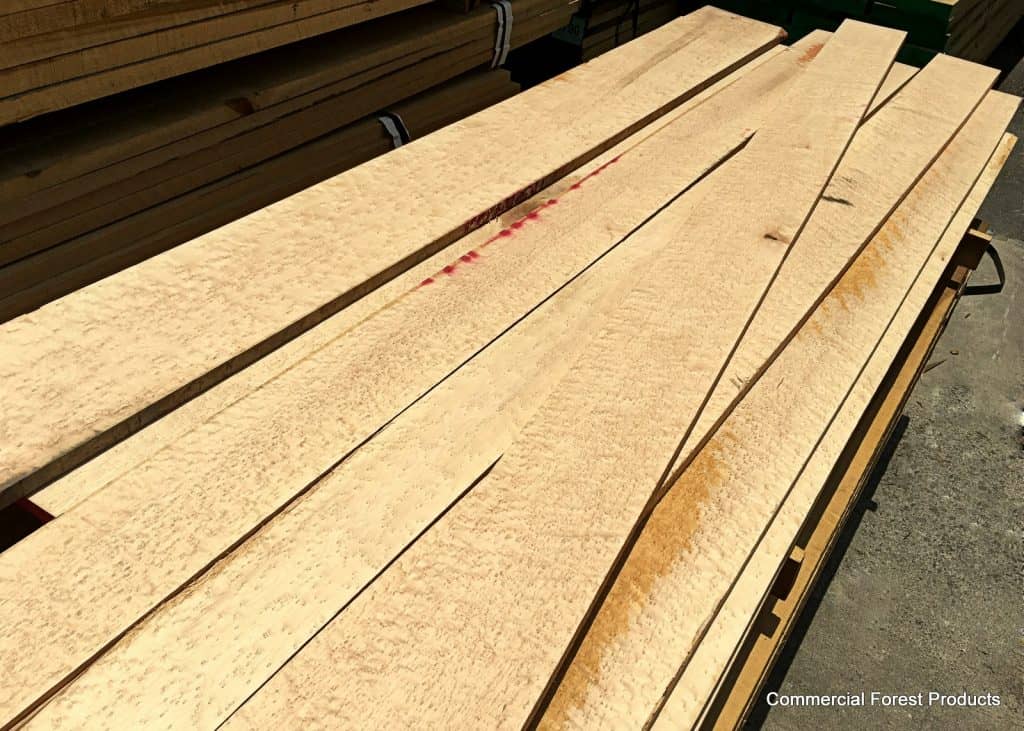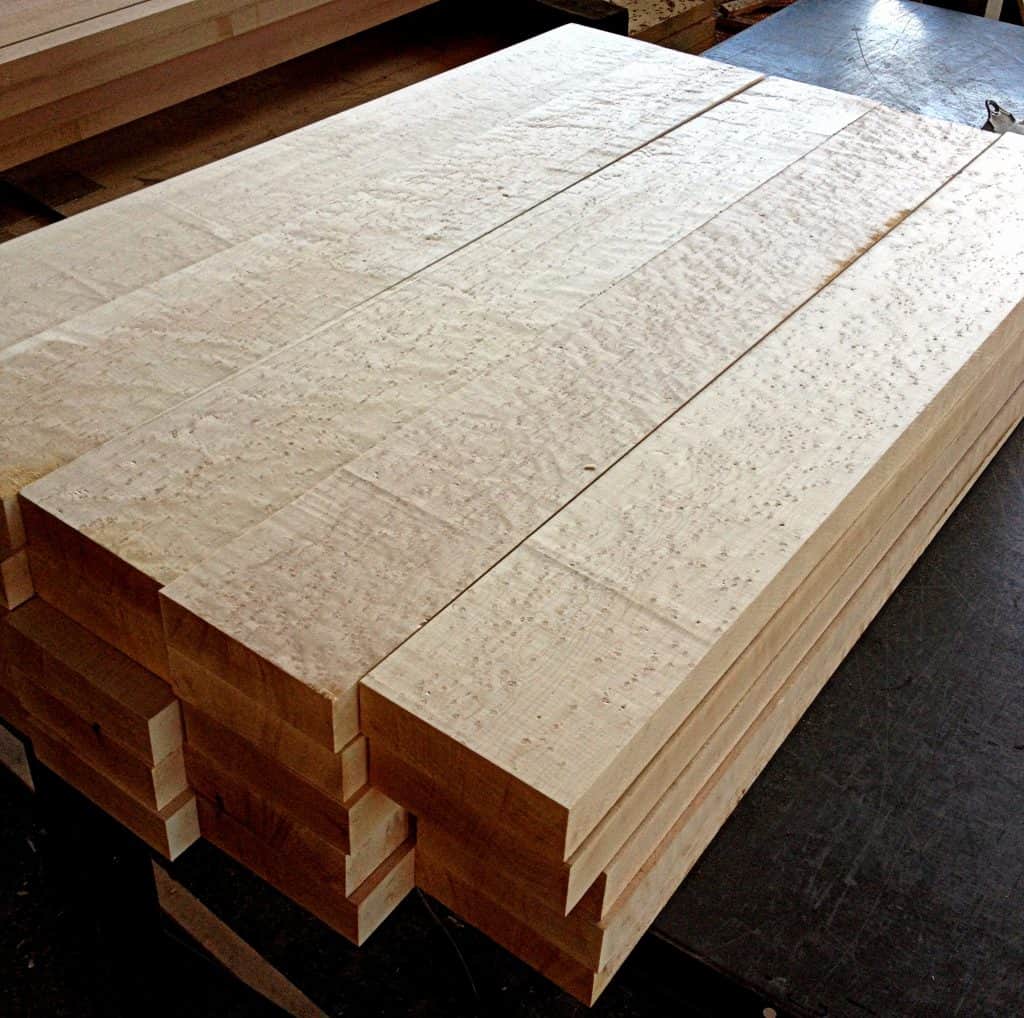
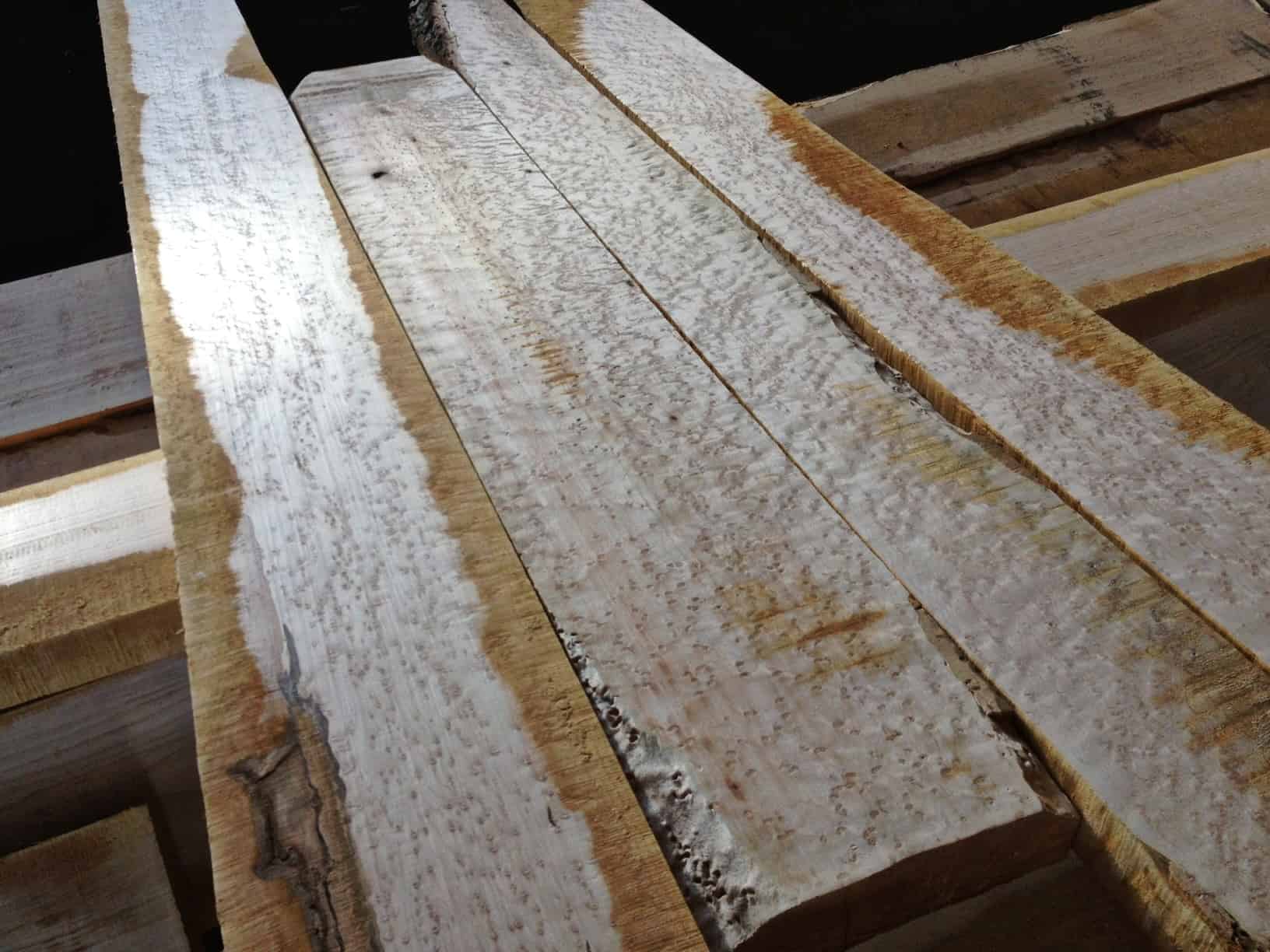
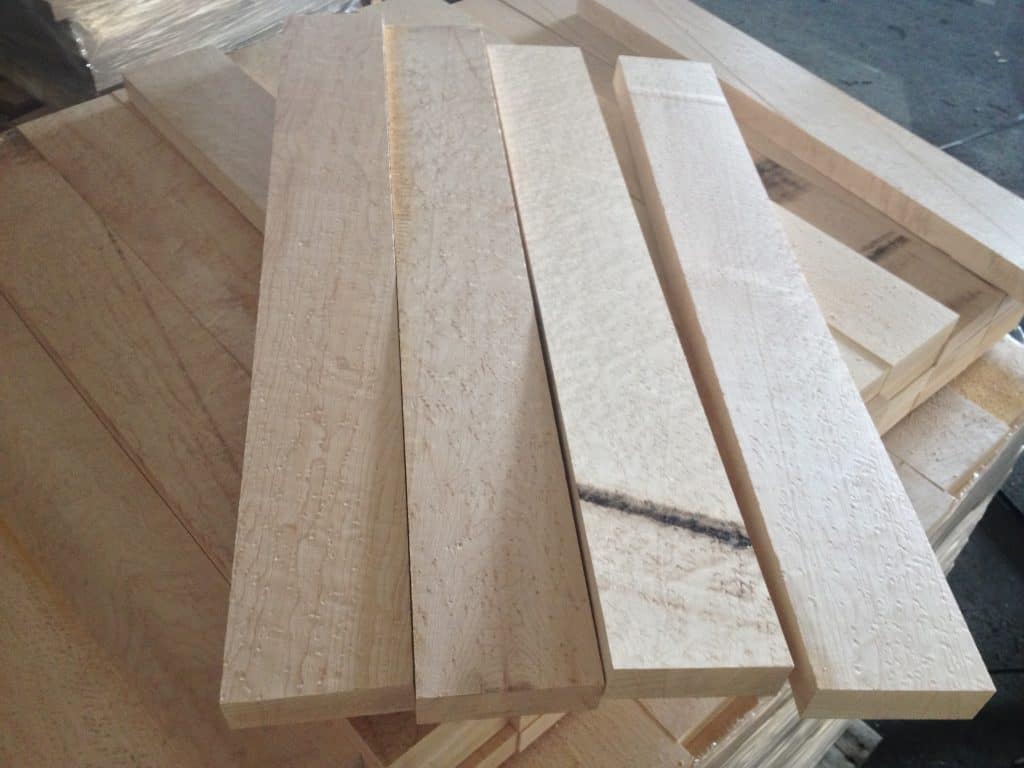
What is Birdseye Maple Lumber?

Technical Information
- Scientific name: Acer saccharum
- Alternative Names: Birdseye Hard Maple, Birdseye Sugar Maple
- Region of Origin: Appalachian United States, Northern United States, Canada
- Average Dried Weight: 44.5 LB/cubic foot
- Janka Hardness Rating: 1455
- Specific Gravity: .72
- IUCN Red List: No
- CITES wood: No
Birdseye Maple Lumber Grades
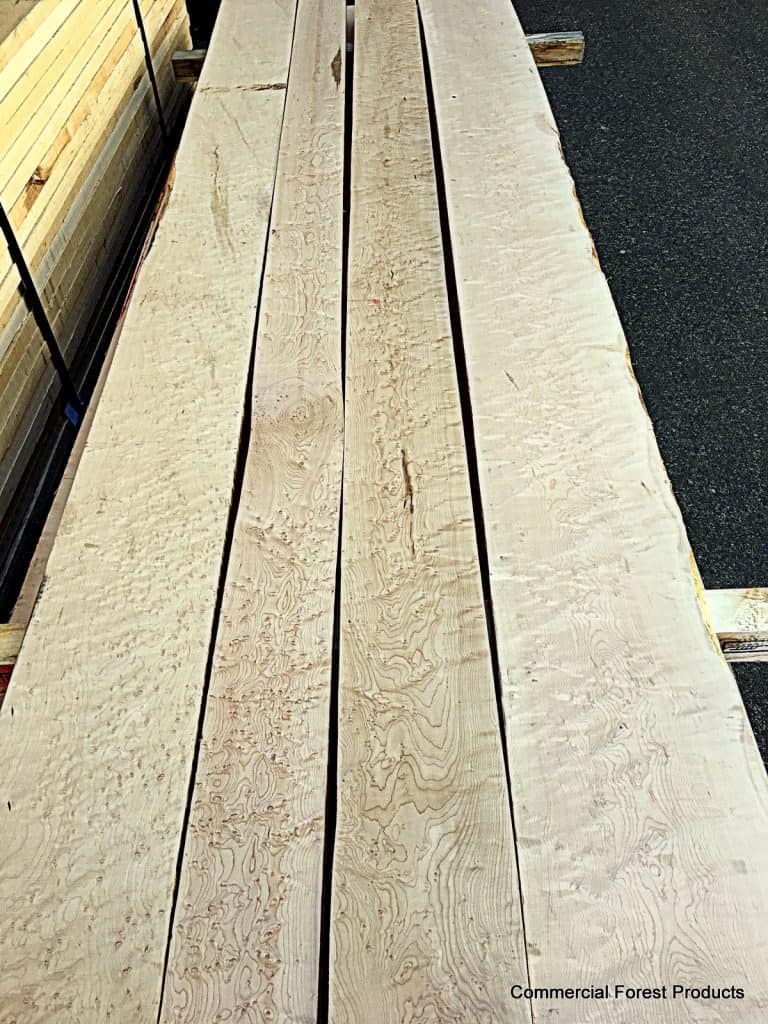
The National Hardwood Lumber Association created grading standards for maple lumber grades. However, the grading scale only addresses defects and color, not figure. Thus, there are no officially recognized birdseye figure grades.
Unofficial Birdseye Maple Grades
The marketplace needs a way to evaluate figured maple quality. Therefore, by default, lumber companies and woodworkers use the following methods:
- Proprietary Grades. Proprietary birdseye grades are established independently by the birdseye maple suppliers. Obviously, there is a potential conflict of interest when a wood supplier grades their own product at their own discretion. Thus, there is a proliferation of AAA, AAAA, AAAAA, AAAAAA, etc. type Birdseye grades online. They are only meaningful to the Birdseye supplier who designates them and the customers who have confidence in them. Some Birdseye sellers assign proprietary grades more objectively than others.
- American National Standard for Hardwood and Decorative Plywood. The Decorative Hardwoods Association has grades and standards. However, they specifically address sheet good ie veneer grades. Thus, it is not particularly appropriate for grade lumber quality birdseye.
- Adjectives. Similar to proprietary grades, many Birdseye suppliers rely on descriptive adjectives to qualify their figured wood offerings. Unfortunately, terms such as: mastergrade, luthier stock, private stock, private reserve lack any real meaning. Curiously, I have yet to see a Birdseye supplier assign adjectives to low-grade figure. “Mediocre Birdseye” or “Picked-over grade,” perhaps? That is a tough sell, no doubt.
- No grades. Leaving grades out of the description is a smart choice. Instead, we prefer the objective presentation of a digital image. Customers can decide with their own eyes if the figure meets their needs. This works well for us.
Birdseye Purchasing Issues
There are 3 primary issues facing birdseye buyers.
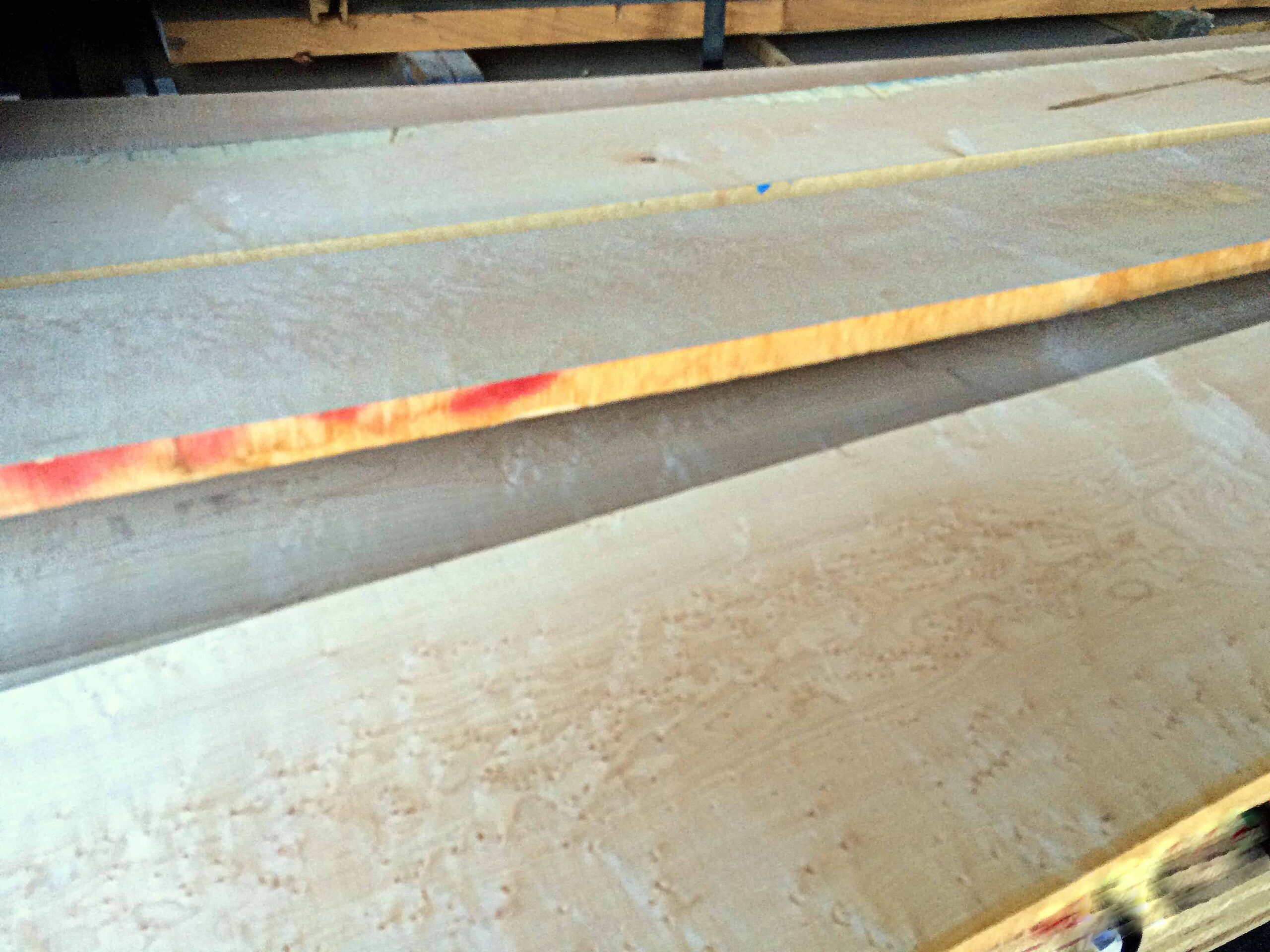
- Grade confusion. Understandably, the lack of a clear grading standard causes confusion in the marketplace. Buyers ask for Birdseye Maple wood with a grade in mind. Sellers fill Birdseye Maple wood orders with what is available in inventory. Typically, high quality birdseye figure is sold quickly while low-figure birdseye lumber does not. Obviously, birdseye that is readily available for purchase is much more likely to be low-quality than high.
- Birdseye availability. Generally speaking, very little birdseye maple exists in lumber form. There are two reasons for this. First, percentage-wise few maple trees exhibit birdseye figure. Second, when Birdseye Maple logs are processed, they are mostly manufactured into veneer for plywood rather than grade lumber. Third, sourcing and maintaining good birdseye maple inventory is frustrating for many hardwood distributors. Thus, many wood sellers avoid carrying it altogether.
- Veneer quality expectations in lumber form. A large percentage of BE maple products incorporate veneers rather than solid maple wood. As stated earlier, veneers have stronger figure than lumber. Thus, when customers ask for a birdseye lumber product, it’s often based on the visual appeal of a birdseye veneer product. When veneer standards are applied to grade lumber the results often disappoint.
Is Birdseye Maple Lumber Expensive?
Yes. Good quality Birdseye Maple sells at a premium of 2.5-20 times that of unfigured Sugar Maple. However, weakly figured birdseye often sells for less than its unfigured counterpart. This is because the figure is undesirable yet the board is not clean enough to work as on-grade.
Why is Birdseye lumber expensive?
Birdseye lumber is expensive because veneer producers earn a much higher return making veneer than sawmills do making grade lumber. Thus, once a highly figured Birdseye log goes up for bid, veneer producers can easily and consistently outbid lumber producers.
Veneer producers peel a log like a paper towel roll at 1/32″ thickness and earn money by the square foot. Compare this to lumber producers who slice logs into boards no thinner than 1″. The yields are astoundingly different.
Veneer mills pay top dollar for logs that are large, clear, mostly sapwood, heavily figured, symmetrical. At 1/32″ thickness they cannot afford to be surprised by anomalies. If a board doesn’t peel well, it’s disastrous.
Logs that produce really nice Birdseye maple lumber were likely rejected by veneer buyers.
Can We Get Veneer Quality Birdseye?
Yes. We can get that quality of Birdseye. However, it involves outbidding interested veneer buyers. In my experience, most people are shocked to find out the cost of doing so.
Birdseye Maple Lumber Prices
Our Birdseye wood pricing depends on the grade specifications and market availability. Please contact us for current information.
What Makes Birdseye Lumber Valuable?
Birdseye’s value is determined by five factors:
1.Eye size. Large eyes command a higher premium than smaller ones.
2.Eye density. A high concentration of eye figure is more valuable than scattered eyes.
3. White sapwood coverage. Figure in bright white sapwood is preferable to figure in brown heartwood or mineral.
4. NHLA lumber grade. As with un-figured lumber, value is proportional to NHLA grade.
5. Face coverage. When Birdseye density is consistent in a log, eyes are visible in both faces of the lumber produced. Boards like that can be carved on both faces without concern that figure will run in and out. Accordingly, lumber with good figure on two faces commands a premium.
Birdseye Maple Tree Identification
Seasoned foresters, sawyers and log buyer can spot Birdseye maple in a living tree. There are several things to look for:
- Indentations in the bark of the tree which show the size, shape and layout of the eyes within the tree. These don’t always show on the bark.
- The trunk of a tree is usually thicker than the rest of the tree. Sometimes, a slightly shrunken trunk base is an indicator of birdseye figure.
- Birdseye often occurs when maple trees are in less-than-ideal growing conditions. Look for trees in areas with shallow soil and cramped spacing.
- Branches extending in an horizontal manner.